
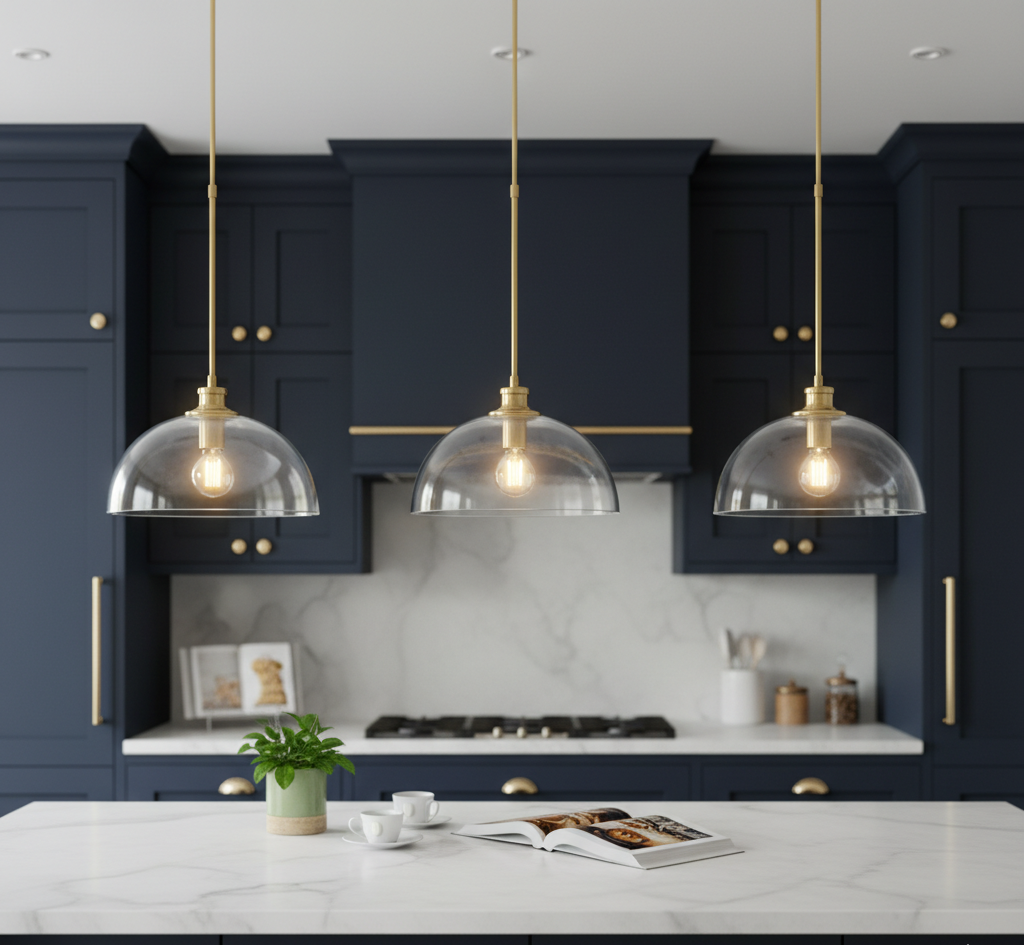
Few lighting fixtures make as dramatic an impact as pendant lights. Suspended from the ceiling like jewelry, they bridge the gap between functional illumination and sculptural art. Whether you're lighting a dining table, kitchen island, or entryway, choosing and positioning pendant lights correctly can elevate your entire space.
Selecting the Right Size
The most common mistake in pendant lighting is choosing fixtures that are too small. A tiny pendant above a large dining table looks lost and provides insufficient light. Follow these guidelines to get proportions right:
For dining tables, measure your table's width in feet, then convert to inches—that's your maximum pendant diameter. For example, a 4-foot table can accommodate pendants up to 48 inches wide. If using multiple pendants, divide this measurement by the number of fixtures. A safer approach for most homeowners is to stay at about two-thirds of this maximum for a balanced look.
Kitchen islands require different math. Measure the island's length and width, add those numbers together, and convert the feet to inches. This gives you the ideal combined diameter if using multiple pendants. For a 6-foot by 3-foot island (6+3=9), you might choose three 9-inch pendants or two 13-14 inch pendants.
In entryways and foyers, look up. Measure your ceiling height in feet, multiply by 2.5-3 inches, and that's your ideal fixture height. A 10-foot ceiling calls for a pendant 25-30 inches tall. This ensures the fixture feels substantial without overwhelming the space.
Mastering the Height
Proper hanging height transforms good lighting into great lighting. The standard rule for pendants above dining tables places the bottom of the fixture 30-36 inches above the table surface. This height provides adequate illumination while maintaining clear sightlines for conversation. Taller individuals or those who prefer an airier feel should opt for 36 inches, while 30 inches creates a more intimate atmosphere.
Over kitchen islands, hang pendants 30-40 inches above the counter. The wider range accounts for varying cabinet heights and ceiling conditions. If your island serves double-duty as a dining area, lean toward the 36-40 inch range to maintain comfortable dining sight lines.
For open spaces without furniture beneath, subtract 7 feet from your ceiling height—that's where your pendant's bottom should hang. In a room with 9-foot ceilings, position the fixture so its lowest point sits at 7 feet from the floor. This prevents taller individuals from colliding with the fixture while maintaining visual impact.
Multiple Pendants: Creating Balance
When installing multiple pendants, spacing matters as much as size. Over rectangular dining tables or long islands, divide the length into thirds. Install pendants at the one-third and two-third points, creating visual balance. For very long islands (over 8 feet), consider three pendants, placing one in the center and the others at the quarter points.
The space between pendants should roughly equal their diameter. If hanging 12-inch wide pendants, space them 12-14 inches apart, center to center. This creates rhythm without crowding. However, never place pendants closer than 6 inches apart, regardless of their size.
Style and Material Considerations
The right pendant complements your space without competing for attention. In minimalist, modern interiors, clean-lined glass or metal pendants work beautifully. Our clear capsule pendants in matte black offer transparency that doesn't clutter visual space. Traditional spaces benefit from fixtures with more ornate details—aged brass with seeded glass, for instance, adds warmth and character.
Consider how the pendant looks when illuminated. Opaque shades direct light downward, creating pools of focused illumination ideal for task-heavy areas like kitchen islands. Translucent or perforated materials diffuse light in all directions, better suited for ambient lighting over dining tables. Clear glass showcases decorative bulbs, making the bulb itself part of the design statement.
Mixed metals are having a moment, and pendant lighting offers an excellent opportunity to introduce this trend. Combine matte black fixtures with aged brass accents, or mix polished chrome with oil-rubbed bronze. The key is maintaining similar visual weights—delicate brass with robust black creates dissonance, but substantial fixtures in both finishes can coexist beautifully.
Pendant lighting represents an investment in your home's ambiance and functionality. By choosing the right size, hanging them at optimal heights, and selecting styles that harmonize with your space, you create lighting that's both beautiful and purposeful. Remember: great pendant lighting looks effortless, but that effortlessness comes from careful planning and attention to detail.