
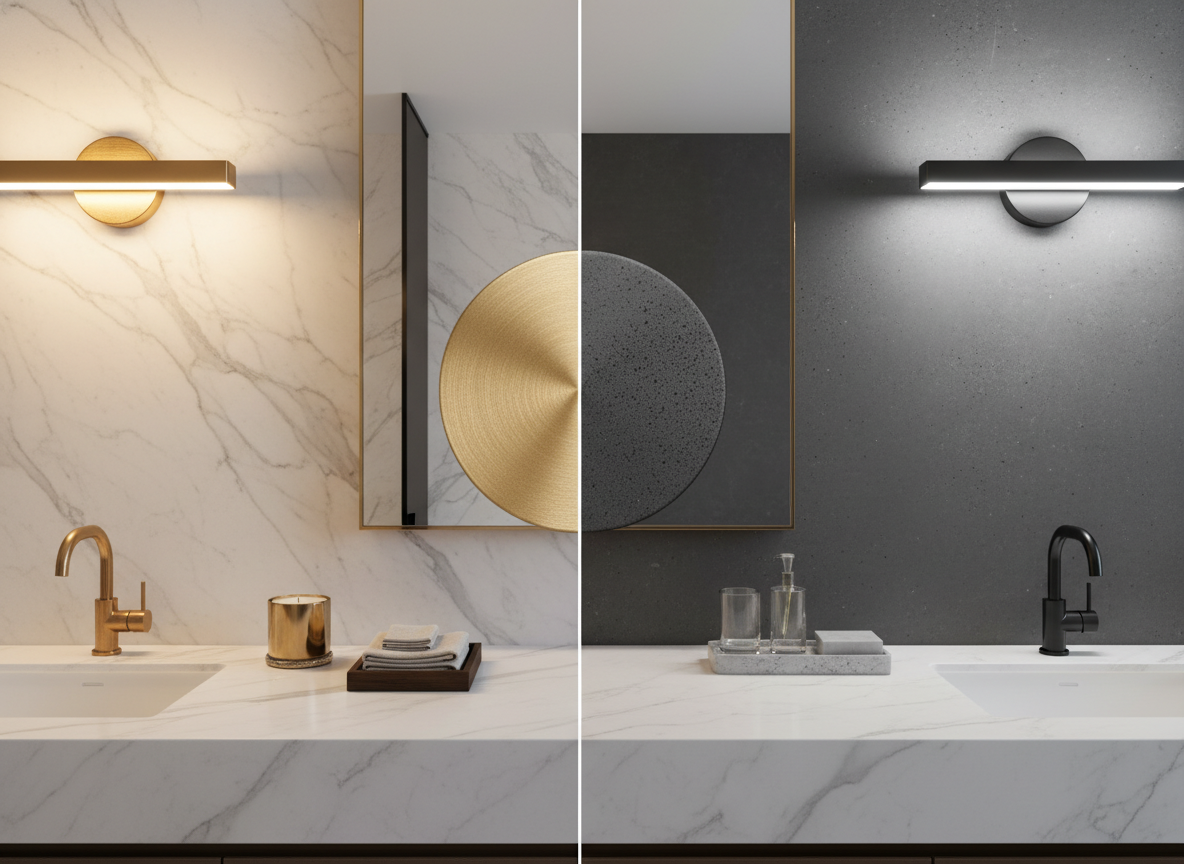
Walk into any design showroom today, and you'll encounter the same decision point: brass or matte black? These two finishes have dominated the lighting world for the past several years, and for good reason. Each brings distinct qualities to a space, yet choosing between them—or knowing when to mix them—requires understanding what they communicate and how they interact with other design elements.
The Case for Aged Brass
Brass lighting carries an undeniable warmth that instantly elevates a space. Unlike its flashier cousin, polished brass, aged or antique brass offers sophisticated patina that reads as collected rather than trendy. This finish excels in spaces that benefit from warmth—think north-facing rooms that receive limited natural light, or contemporary spaces that risk feeling too cold.
Brass has remarkable versatility. It complements warm wood tones beautifully, creating cohesive, inviting environments. In modern spaces with marble, concrete, or white subway tile, brass adds a necessary warmth that prevents the space from feeling sterile. The finish also plays well with various metals—stainless steel appliances, chrome faucets, and even copper accents can coexist with brass when introduced thoughtfully.
From a practical standpoint, brass ages gracefully. Natural patina development only enhances its character. Fingerprints and minor wear disappear into the finish rather than announcing themselves. For busy households, this forgiving quality makes brass particularly appealing. Our aged brass vanity lights, for instance, maintain their beauty through daily use without constant maintenance.
The Power of Matte Black
Matte black fixtures deliver drama and definition. This finish creates instant visual anchors, drawing the eye upward and adding architectural interest to otherwise plain ceilings. Black works particularly well in spaces with high ceilings, where you want to create visual interest without lowering the perceived ceiling height.
The graphic quality of black makes it ideal for modern, minimalist, and industrial aesthetics. It provides clean contrast against white walls, making spaces feel crisp and intentional. In Scandinavian-inspired rooms with light woods and neutral palettes, black fixtures add necessary punctuation without introducing color.
Matte black also offers practical advantages. The non-reflective surface doesn't show water spots or fingerprints as readily as shinier finishes. In bathrooms and kitchens—high-humidity, high-touch environments—this translates to less maintenance. The finish's contemporary feel ensures it won't look dated quickly; black has been a classic for over a century across various design movements.
However, black requires careful consideration of quantity. Too many black fixtures in a small or dark room can feel heavy and oppressive. The finish works best when balanced with plenty of natural light, white or light-colored surfaces, and thoughtful spacing between fixtures.
Making the Choice: Context Is Everything
Your decision between brass and black should start with your existing fixed elements—those expensive, less-easily-changed features like flooring, countertops, and cabinetry. If you have honey oak floors, warm granite, or cherry cabinets, brass provides continuity. If your space features cool-toned marble, concrete floors, or painted white cabinetry, black typically integrates more seamlessly.
Consider your climate and natural light. Homes in sunny climates with abundant natural light can handle the coolness of black fixtures without feeling stark. In regions with long, gray winters or rooms with limited natural light, brass adds warmth that compensates for what nature doesn't provide.
Think about longevity versus trend. While both finishes have staying power, brass cycles in and out of peak popularity more than black. If you're renovating for resale in the next few years, black offers broader appeal. If you're designing your forever home, choose based on your personal preference—you'll be living with it long enough that trend cycles become irrelevant.
The Art of Mixing Finishes
Here's where things get interesting: you don't have to choose. Mixed metal interiors have moved from design dare to design standard. The key is doing it with intention rather than indecision.
The most successful approach establishes a dominant finish (roughly 70% of visible metal) and introduces the secondary finish as an accent (about 30%). For example, you might choose matte black pendants, table lamps, and cabinet hardware, then introduce aged brass through wall sconces and a bathroom vanity fixture. This creates visual interest while maintaining cohesion.
When mixing, maintain consistent visual weight. Delicate brass fixtures alongside chunky black ones creates dissonance. Instead, pair substantial pieces in both finishes, or lean minimal across the board. Our collections make this easier by offering similar designs in both finishes—you can mix our Castell chandelier in aged brass with Castell vanity lights in matte black, knowing the scale and style complement each other.
Avoid mixing more than two metal finishes unless you're working with a designer. Three or more can quickly feel chaotic. If you already have stainless appliances (a cool-toned metal), adding both brass and black lighting risks visual confusion. In this scenario, commit to black lighting and introduce brass through smaller accessories rather than major fixtures.
The brass versus black debate ultimately isn't about right or wrong—it's about understanding what each finish brings to your specific space and lifestyle. Brass offers warmth, character, and a collected feel. Black provides contrast, definition, and contemporary edge. Both have earned their place in modern design, and with thoughtful application, either can transform your home from ordinary to extraordinary.